
The bass
hits 128 beats per minute.
On a crowded dance floor,
bodies ripple in sync.
To an outsider
it may seem
like a hedonistic party.
To a neuroscientist however
it’s something closer
to group therapy.
Onderzoek toont aan dat dansen de symptomen van depressie méér verlicht dan wandelen, yoga, krachttraining of standaard behandelingen.
Dansen maakt tegelijkertijd serotonine, dopamine en oxytocine vrij en het verlaagt het cortisol.
Wanneer dansen in groepen wordt uitgevoerd, creëert het synchronisatie tussen de hersenen en dat versterkt sociale banden.
Onderzoekers pleiten er nu voor om dansen te beschouwen als een eerstelijnsbehandeling voor depressie.
Of het nu in een woonkamer of een balzaal is, bewegen op de maat van de muziek blijkt een transformerende werking te hebben.
Words.
Christabel Lobo
in National Geographic
september 2025
‘Dance is a language of the body’, says Julia F. Christensen, a neuroscientist at the Max Planck Institute for Empirical Aesthetics and author of Dancing Is The Best Medicine’.
For centuries, communities have turned to dance, not only for celebration but for ritual and healing.
Long before scientists tracked brain waves or measured neurotransmitters, dancers had an intuitive understanding of the power of moving together.
Now, the research is starting to catch up.
A 2024 meta-analysis, published in The British Medical Journal, reviewed 218 clinical trials and found that dance reduced symptoms of depression more than walking, yoga, strength training and even standard antidepressants.
While only 15 of the studies focused specifically on dance, the results were enough to grab the attention of researchers.
‘I was surprised dance even had five studies on it’, says Michael Noetel, associate professor at the University of Queensland and lead author of the review.
‘Between the physical activity, social interaction, and the infusion of music, I’m not surprised that dance performed well.’
Still, researchers caution that more large-scale studies are needed before dance can be considered a stand-alone treatment.
With depression affecting more than 29 percent of U.S. adults at some point in their lives and therapy remaining costly or inaccessible for many, dance may offer something rare: a treatment that’s joyful, affordable and already woven into how humans connect.
Why your brain loves moving to music.
Our brains are wired for rhythm and dancing engages our entire nervous system.
Some neuroscientists describe this full-body stimulation as a neurochemical symphony.
Anticipating a melody can trigger the release of dopamine.
Physical movement boosts endorphins.
Dancing with others increases oxytocin.
Studies have shown that this trifecta can enhance mood, increase social bonding and reduce stress.
Christensen says this combination of elements likely sets dance apart from other forms of exercise
such as sports and yoga.
‘In Dance Movement Therapy, for example, the actual reduction of anxiety and depressive symptoms is linked to the expressive component of dancing’, she says.
‘You are taking something that makes you you, or feelings that are difficult for you and you channel all of that out of your system, by expressing it, through the gestures of your arms, as you dance.’
In clinical trials, this shows up in measurable ways.
‘It wasn’t the slow stretching parts, how often people exercised per week or how long the program was that had the effect’, says Noetel.
The more vigorously people danced – especially to music – the greater the reduction in symptoms.
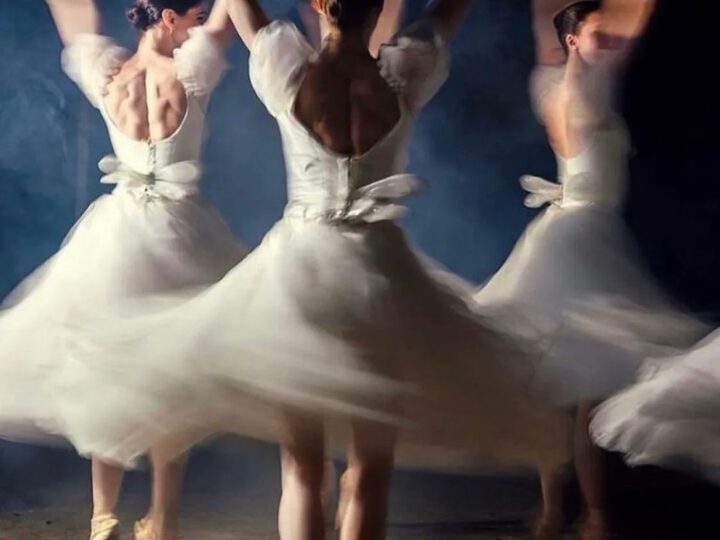
In those peak moments – when the beat drops, the floor vibrates and strangers move as one – researchers have observed a phenomenon called interbrain synchrony.
It’s the alignment of brain activity across people, often seen in studies of group movement.
Moving in sync with others blurs the line between self and other, says Christensen, and this can result in a powerful increase in trust and connection.
How dance rewires your mind and body.
For people living with depression, even basic movement can become muted.
Neuroscientists have observed a reduction in facial expressiveness, gestures, and posture – what some describe as a loss of the body’s emotional vocabulary.
Dance offers a unique way to reconnect with oneself.
It can activate emotional, cognitive and sensory pathways, reawakening a sense of connection within and beyond the self.
Depression isn’t just about mood. It also affects how we relate to our own bodies and to others.
‘The human brain needs other humans around it to stay sane and healthy, physically and mentally’, says Christensen.
‘For evolutionary reasons, our brain will go into survival mode if it’s alone.’
Dance may also offer something talk therapy can’t: a way to process emotion without language.
‘Dance invites people to express something without needing to put it into words’, she says.
For many, that can be incredibly healing and a great complementary therapy to talk therapy.
That may explain why the most effective interventions in clinical trials involved not just movement, but dancing with music and other people -something Noetel says may be key to dance’s effectiveness.
Why dancing together heals us.
Beyond mood improvement or physical activity, dancing in a group provides something uniquely human: deep connection.
Juan Atkins brought drum machines to youth parties, creating what would become house and techno music.
These weren’t just musical innovations. They were community-healing spaces where people came together during difficult times.
Cultural historians and ethnomusicologists have since described these spaces as critical sites for joy, resistance and solidarity.
Christensen notes that dancing with others can blur boundaries between people.
‘If we move in synchrony, it confuses our brain in a good way and makes the perception of me and of you overlap’, she says.
Neuroscientists refer to this overlap as co-representation.
It may increase bonding, trust and empathy. Essential components of mental well-being.
These findings have inspired new approaches to therapy and social care, where movement-based programs are being used to help patients who struggle with verbal expression or social isolation.
In the U.K., the NHS offers dance programs for older adults with dementia.
In Australia, researchers have found that structured dance programs, across all age groups, can be equal to or more effective than other exercises in improving mental health, motivation and cognitive function.
Finding your way onto the dance floor.
In lab settings, many interventions for depression focus on managing symptoms.
Dance, some argue, goes further – it creates moments of joy.
From salsa classes to underground club dancefloors, the best results came from programs that prioritize social engagement and musicality.
Dance thrives in settings where creativity and agency are encouraged.
Researchers say this helps reestablish a sense of control and self-expression, both of which are often blunted by depression.
This insight is shaping a new generation of dance-based programs.
From school classrooms to senior centers, instructors are shifting their focus from technical precision
to expressive movement and community bonding.
Dance may also restore something depression often takes away: agency.
It gives you the chance to choose your style, your rhythm, your way.
‘If people don’t know what dance can do for them, they have probably not found their dance style yet’, says Christensen. ‘There are hundreds of dance styles in this world to choose from.’
As mental health care continues to evolve, dance is emerging as more than just a cultural practice or physical workout.
Picture.
Nick Fancher